A recurring film cue is a piece of music that returns, note for note or nearly so, at different points in a film. The second time it plays, the audience hears something the first hearing could not contain: everything that happened in between. The notes are identical. The meaning is not.
This is the quiet engine of most memorable scores. A composer writes a theme, plants it early, and lets the story pile context on top of it. By the final act, the same handful of measures can carry grief, irony, relief, or dread, depending on where the story has carried them. The narratives a score builds work this way less through novelty than through accumulation.
The question a returning cue poses is, at bottom, a question of reason. The Cambridge Dictionary defines "why" as the word for asking for what reason or purpose, and that is precisely what a repeated cue asks the viewer: why this music, here, now. The answer lives in the gap between the first hearing and the present one.
Recognition comes first, and it is fast
Before a returning cue can mean anything, the listener has to recognize it. That recognition is largely unconscious. A theme does not announce itself as a theme; it simply registers as familiar, the way a face does across a crowded room. Film composers work with short, distinctive melodic shapes precisely because recognition favors brevity. A few notes, a particular interval, a signature texture in the strings or the synth pad, and the ear has it. This connects to our earlier piece, Theatre of the Ear: how music and sound design carried radio drama before television.
The craft term for this is the leitmotif, a recurring musical phrase attached to a character, place, or idea. The word comes from nineteenth-century opera, where composers wove short identifying figures through long works so the audience could track who and what mattered without a libretto in hand. Film scoring inherited the technique and made it subtler. Where opera could state a motif boldly, a film score often works at the edge of attention, under dialogue, half-heard.
That half-heard quality matters. A cue the listener consciously catalogs on first exposure has spent its surprise. A cue that slips in quietly builds a store of familiarity the listener only notices when the music returns and the recognition lands. The audience does not think "that theme again." The audience feels the character again, or the place, or the threat, without knowing why the feeling arrived.
Context is the variable the composer cannot write
Here is the strange part of the mechanism: the composer controls the notes, but the meaning of a recurring cue is co-written by the story. The same eight bars over an opening scene of domestic calm will read as elegy if they return over a shot of that same house emptied out. Nothing in the score changed. Everything around it did.
This is why a returning cue functions less like a melody and more like a word in a sentence. A word's meaning depends on the sentence it sits in. A cue's meaning depends on the scene it sits in, and on every earlier scene the listener has attached to it. The first statement of a theme is a definition. Every later statement is a usage, and usages accumulate shade.
Composers know this and write for it, though the claims about any particular composer's intentions should always be traced to what that composer actually said or wrote. What can be described without access to anyone's intent is the effect itself: a theme introduced over a wedding and restated over a funeral does not need the composer's testimony to demonstrate the transformation. The film supplies the context. The listener supplies the memory. The score supplies the trigger.
The listener's memory is the real instrument
Every return of a cue plays not just to the scene on screen but to the listener's accumulated history of the cue. By the third or fourth hearing, the theme carries its own biography: the first time it appeared, the time it appeared in a minor key, the time it was cut off mid-phrase. A final statement of the theme is heard through all of those. The audience has, without realizing it, been studying the score the whole time.
This is why the most devastating returns are often the simplest. A theme that has always arrived in full arrangement, and then returns near the end played by a single instrument, reads as loss or exposure, because the listener registers what is missing. The music has changed shape, and the change is legible only against the memory of the earlier versions. Stripping a theme down is a form of storytelling that requires no new material at all.
The reverse move works the same way. A fragile theme that finally arrives in full orchestration lands as arrival, resolution, or release, because the listener has been waiting for the weight the theme never had. In both cases the emotional information is not in the notes. It is in the distance between versions.
What this means for how composers build a score
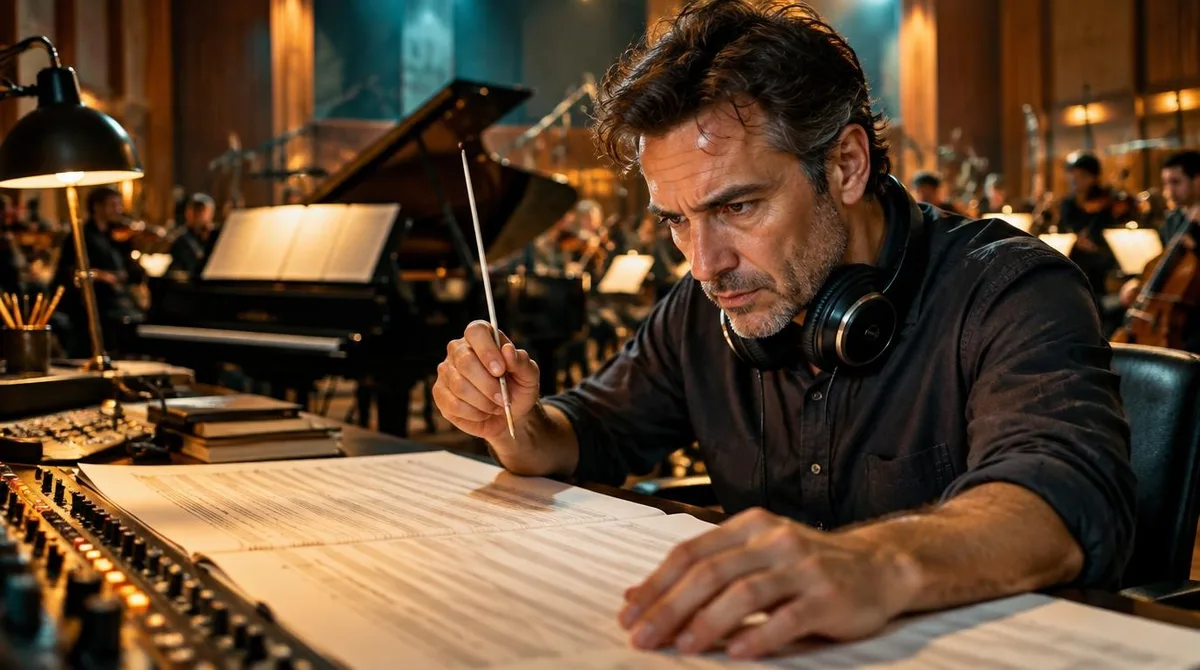
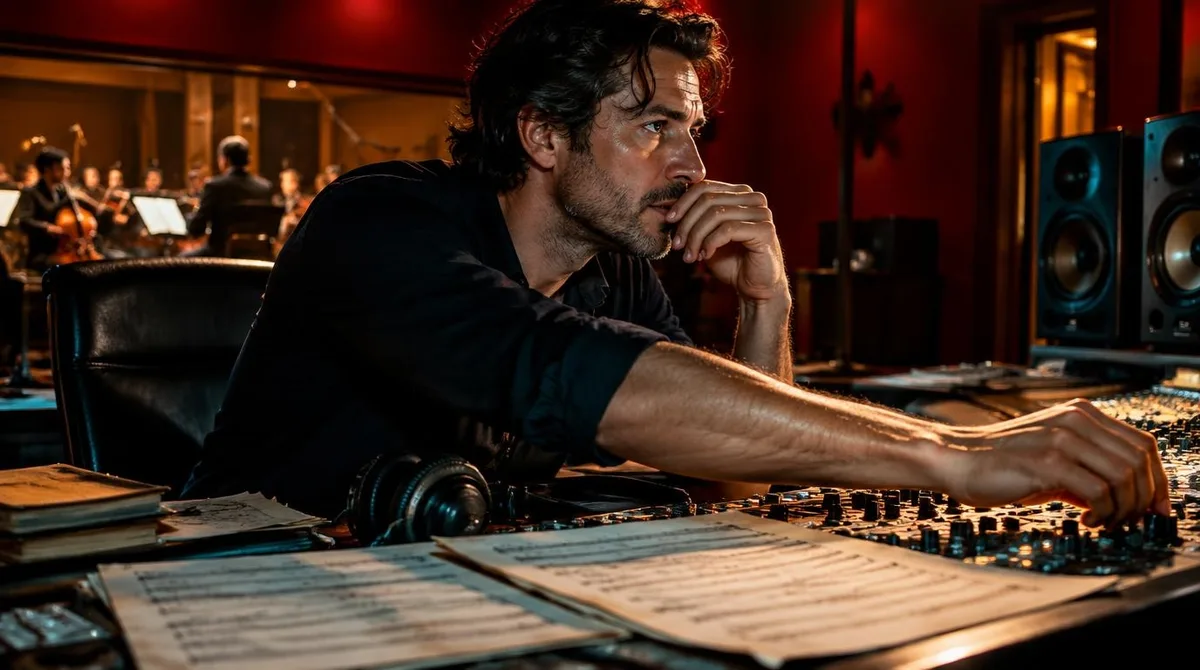
Seen from the composer's desk, a score built on recurring cues is an exercise in deferred meaning. The composer cannot make the second hearing emotional by writing the theme more intensely. The intensity has to be deposited earlier, in scenes whose weight the theme will inherit. The motif that waits for its payoff is the clearest version of this: a phrase planted without emphasis, sometimes barely noticed, that acquires its charge only when the story catches up to it.
It also explains a choice that puzzles some viewers: why a score repeats rather than varies. Variation is a pleasure of its own, and theme and variations has long served as a plot structure in music. But variation changes the object. Repetition preserves the object exactly and changes everything around it, which is what lets the audience measure how far the story has traveled. The identical cue is a fixed ruler laid against a shifting story.
There is a discipline in this for the composer, too. A theme that returns too often, attached to too many moments, spends its meaning and becomes wallpaper. A theme that returns too rarely never accumulates the memory the payoff requires. The craft sits in rationing: enough returns to build a history, few enough that each one registers as an event.
And the technique extends past film. Scored podcasts lean on the same accumulation, since a long audio story needs recurring sound to hold its hours together. So do ballet and radio drama, forms where music has always carried narrative weight without words to lean on. The listener's memory does the work in every one of them. Readers following this should also see Music in the Dark: how scored podcasts hold a long story together.
Why the trick stays invisible
The most effective recurring cues are the ones the audience never consciously registers as technique. That invisibility is not an accident of the craft but its condition. A score that makes the listener notice the machinery has failed at the moment of maximum leverage, because the emotional information arrives only while the listener believes it is coming from the story rather than from the music.
This is also why the same cue can sound different to two people watching the same film. Each listener brings a different memory of the film's earlier scenes, a different attention to the score, a different set of associations with the sounds themselves. The composer writes the trigger. The audience writes the response. The cue is the meeting point, and it never means the same thing twice, because no listener is the same person at the second hearing as at the first.
What the evidence of the form itself establishes is this: recurring music gains meaning through context, association, and accumulated listening, and the notes are the least changed element in the exchange. What remains unknown, film by film, is where the balance sits for any given viewer, how much of the feeling is the composer's construction and how much is the listener's own history laid over it. The next time a familiar theme rises under a late scene, the honest response is not simply to feel it, but to notice what the film has asked that theme to carry since the last time it played. The gap between those two hearings is where the score has been doing its work all along.