Radio drama told stories with no pictures at all, and music did much of the work that cameras would later do: the CBS broadcast of "The War of the Worlds" on October 30, 1938 moved between fake news bulletins and stretches of dance-band music, and those musical breaks made the fictional interruptions feel like a real network interrupting real programming. The broadcast was directed and narrated by Orson Welles for his Mercury Theatre on the Air, and in 2002 it entered the first class of the Library of Congress National Recording Registry. Strip the music and effects out of that script and the panic device collapses; nothing is left to interrupt.
What did music actually do in a radio play?
Music in radio drama performed at least four jobs at once, and every one of them replaced something visual. It set place, so a few bars of a habanera could stand in for a travel shot; it marked time, bridging scene changes that a film would cut across; it signaled feeling, telling listeners how to take a line that arrived with no visible face attached; and it built structure, opening and closing the little world of the play the way curtains once did in a theatre.
There was also a subtler job. A radio play unfolds in real listening time, with no stage to look at, and composers learned to write for attention itself. Bernard Herrmann, who served as a staff conductor and composer at CBS through the 1930s and worked on Welles's broadcasts, wrote and arranged cues meant to hold a listener through long stretches of dialogue. His radio scores lean on ostinatos, repeating figures that keep time moving under speech the way a camera drift keeps a film sequence alive. The technique maps directly onto his later film work, where the same restless repetition drives the opening of "Psycho" (1960); the radio studio taught a composer how to accompany a story that could not be seen.
How did sound effects build a world inside the listener's head?
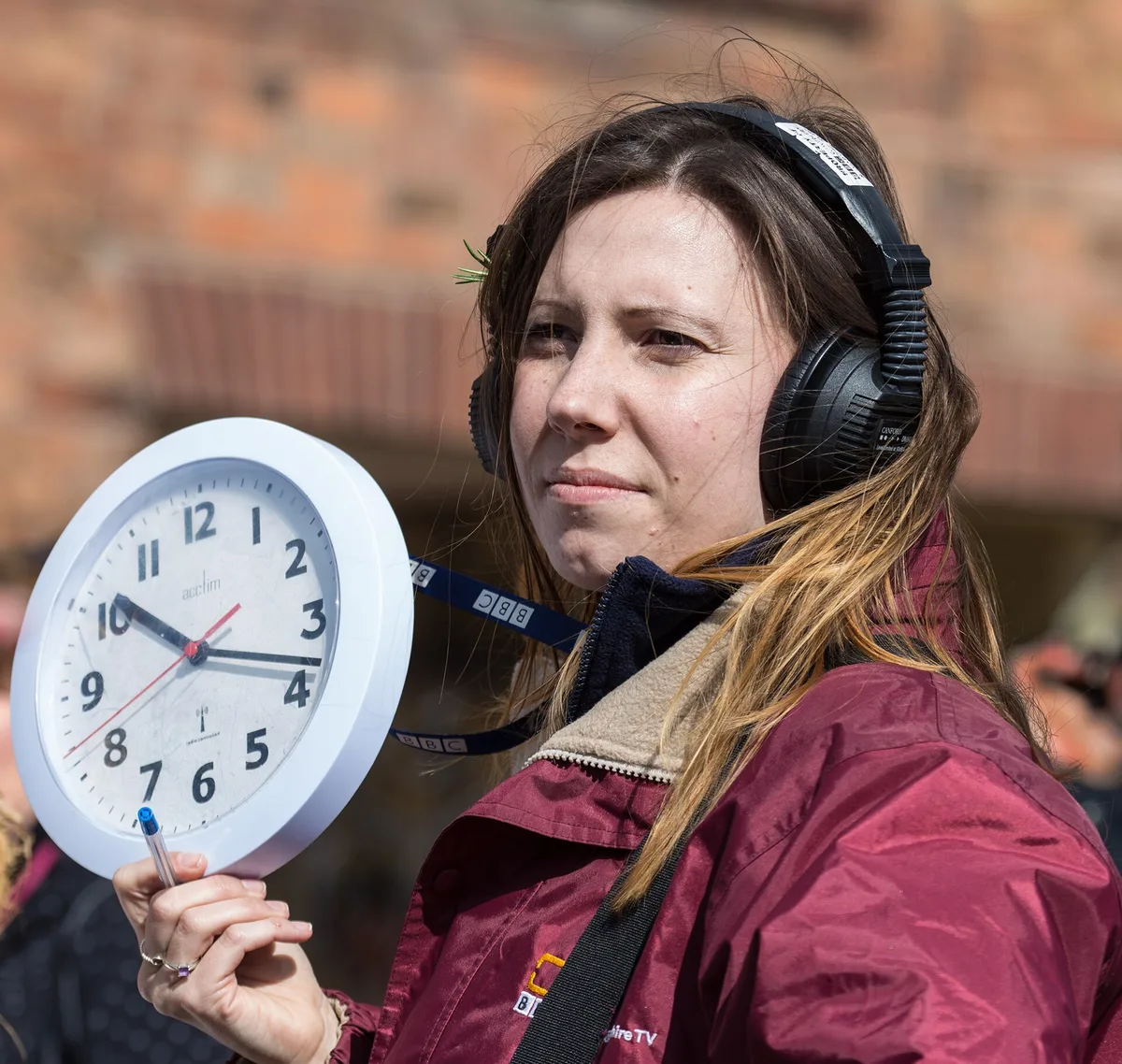
Sound effects in radio were performed, not played back. A sound-effects crew stood by the microphone with doors on hinges, coconut shells, thunder sheets and wind machines, and a badly timed door could destroy an illusion faster than a wrong note. The craft had one governing rule: suggest rather than reproduce. A real ocean recording sounds like noise through a 1930s speaker; a cloth dragged across a drum head sounds like an ocean, because it keeps the rhythm of waves that listeners already carry in memory.
American networks institutionalized the craft early. Shows such as "Lights Out," the horror anthology produced under writer Arch Oboler from the 1930s, became laboratories for aural illusion: a head crushed underfoot was staged with a ripe fruit and a wastebasket, and listeners supplied the rest. Oboler's scripts paused for these effects deliberately, building beats of anticipation around a single sound the way a thriller builds a scene around a door.
Effects also carried narrative information that scripts never stated. Footsteps on gravel say outdoors; the same footsteps with an echo say a stairwell or a hallway. The best crews of the American networks and the BBC could establish a character's arrival before a single line was spoken, which is storytelling of a very pure kind: the listener's imagination does the drawing, the sound department merely sends the order to draw.
Norman Corwin, the writer-director whose CBS documentaries and dramas made him one of the most honored names in American radio, built entire plays on this partnership of word and sound. "On a Note of Triumph," his V-E Day broadcast of May 13, 1945, moved through the fall of Germany with music, crowd sound and narration braided together; it was heard by millions and has stayed in print and in revival ever since, one of the few radio scripts to earn that afterlife.
Why did the voice alone need so much support?
A speaking voice on the radio, it turns out, is thinner than it feels in memory, and the whole apparatus of music and effects exists to fatten it into a world. Silence was part of that apparatus too, and radio's best directors used it as an instrument. A sudden drop of the underscore before a threatening line makes the line land harder, because the listener has been trained by hundreds of broadcasts to hear the music's departure as a warning. Drama departments on both sides of the Atlantic kept underline music scarce for exactly this reason; a score that never stops teaches the audience to stop hearing it.
Great Britain developed its own tradition with different pressures. The BBC Third Programme, launched in 1946, treated radio as a serious dramatic stage, commissioning plays written for the ear, and the comedy tradition running from "The Goon Show" (first broadcast in 1951, with Spike Milligan writing) pushed sound into absurdist territory. The Goons' gunfire, explosions and exploding queues, performed and then spliced on tape, showed that effects could be jokes in themselves rather than furniture. By 1958 the BBC had formalized the experimental side of this craft in the Radiophonic Workshop, whose unit in Maida Vale built otherworldly sounds from test oscillators and tape manipulation.
The Workshop's most famous product arrived five years later, when Delia Derbyshire realized Ron Grainer's composition for the title of "Doctor Who" in 1963, assembling the theme from tape loops and electronic tones by hand. Grainer's melody, Derbyshire's realization, and no orchestra anywhere: the result proved that electronically designed sound could carry as much narrative charge as a studio ensemble, and the shrieking swoop of that title did the work of a hundred curtain-raisers.
Which techniques of radio survived into today's storytelling?
Nearly all of them, renamed. The sting before a cut is now a riser; the bridge between scenes is now a bed; the performed footstep is now a foley artist on a dubbing stage, a job title that radio's live crews made necessary before film fully adopted it. Podcast fiction, which has grown into a busy field of scripted serials and anthology horror, works from the radio playbook almost line by line: establish with ambience, underline with music, cut the music for the scare. Audio-drama producers speak of mixing in the round and writing for the ear, phrasing that would not have puzzled a 1940s CBS director.
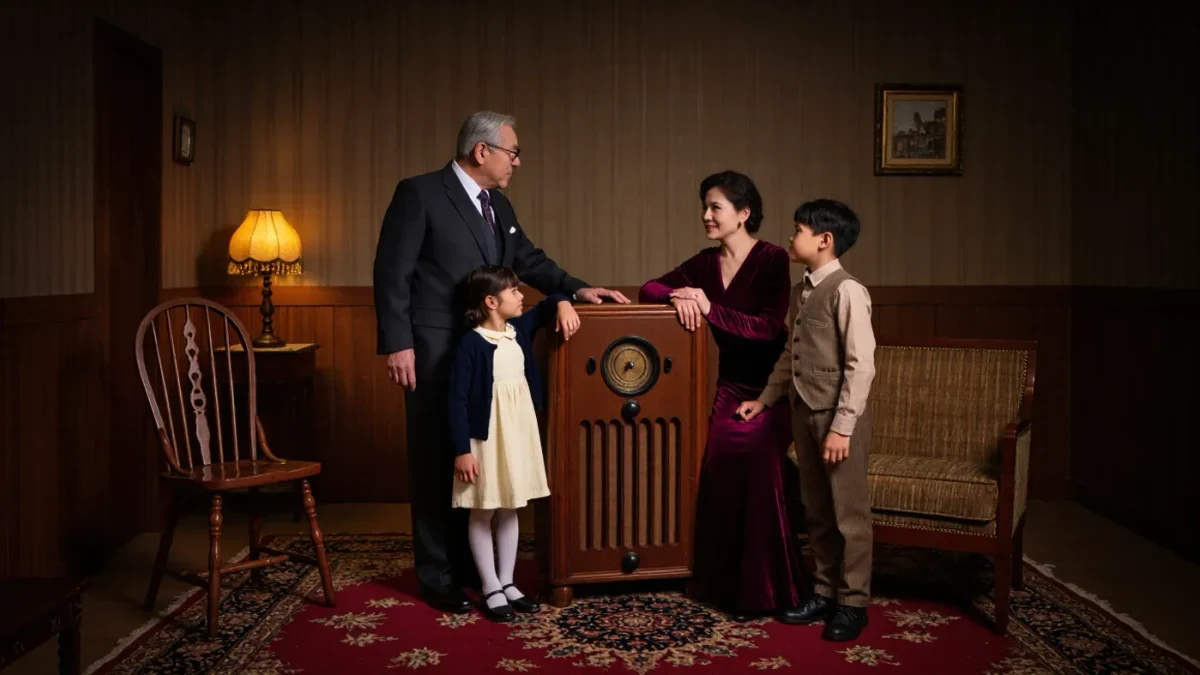
The deeper inheritance is a habit of trust. Radio taught audiences to assemble worlds from sound alone, and once learned, that skill does not expire; it waits for any medium that asks for it. A listener who once sat by a walnut cabinet radio and a listener who now walks a city route with headphones are doing the same imaginative labor, supplying faces, rooms and weather to a story that supplies only vibration. The orchestras are smaller now and the thunder sheets have mostly gone to museums, but the contract between the sound and the listening imagination was drafted in that earlier room, one cue at a time.