A vinyl collection grows fast. One crate becomes two, then a wall. At some point the question stops being what to buy and becomes where to put it all. A good home bookshelf solves that problem once.
Building that shelf is mostly about the records themselves. Their sizes, sleeves, and quirks decide what the shelf must do. Get those facts right and your collection will stay safe for decades.
Start With the Formats
Records come in a few standard sizes, and your shelf must fit all of them. According to a reference article on Wikipedia, the most common formats are 7-inch discs played at 45 rpm, typically singles, and 12-inch discs played at 33 1/3 rpm, known as LPs. Earlier discs ran at 78 rpm and were made from shellac, a harder and more brittle material.
Vinyl itself is younger than many fans assume. Records made from polyvinyl chloride were introduced in 1948 and became standard by 1958, replacing the old 78s. That history explains why older shellac records need different care than modern LPs. We covered a connected angle in The Sleeve Essay: a short history of liner notes as a literary form.
The LP itself has a birthday. Columbia Records unveiled the long-playing record at a press conference on June 21, 1948, after years of research that World War II had paused. The 45 rpm single arrived as a rival format soon after. Together they set the shapes your shelf still has to hold.
Choose a Sorting Scheme
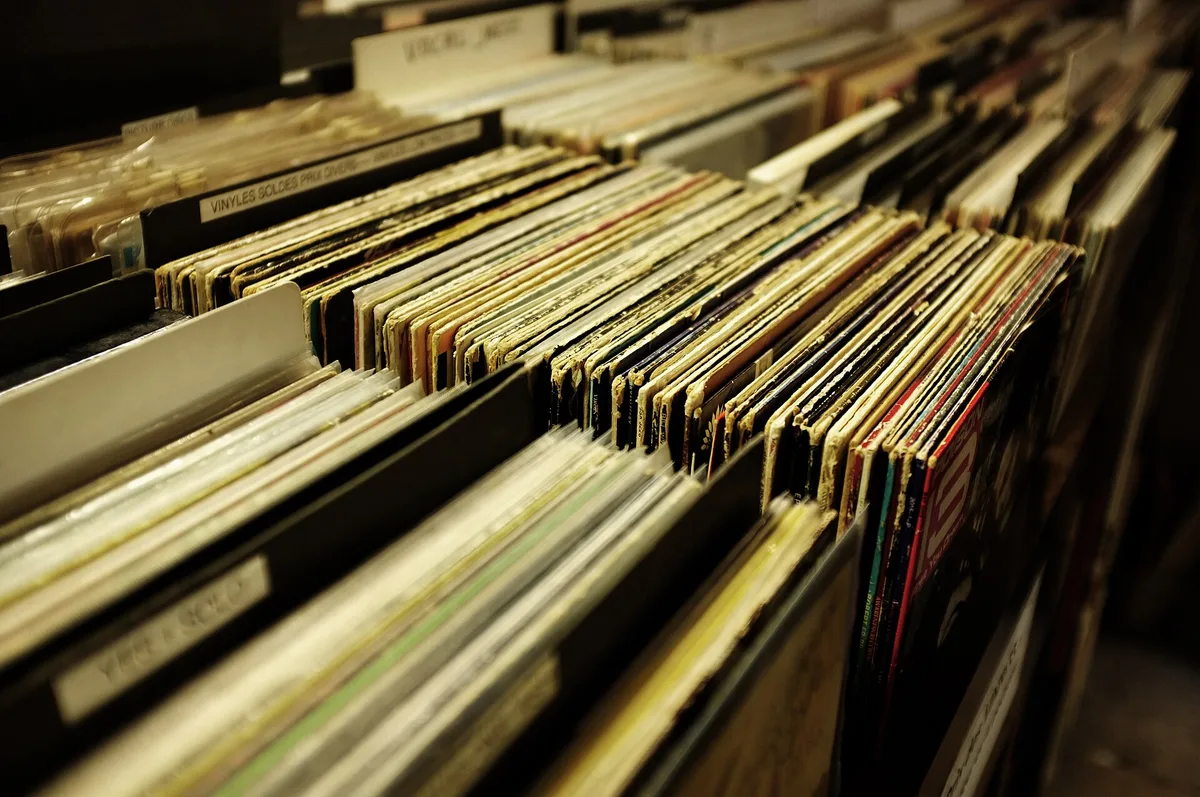
A shelf works best when you can find things on it. Reference material on record collecting lists the common ways collections take shape: by genre, by artist or producer, by record label, by period, or by format.
Pick one primary scheme and stick with it. Many collectors sort first by broad genre, then alphabetize by artist. Whatever you choose, leave room at the end of each section. Collections grow, and reshuffling a full shelf is no small task.
Protect What You Have
Storage is also about value. First pressings of original commercial releases usually carry higher value among collectors than later pressings. Original editions of LPs often have inserts and other features that later editions lack, so losing an insert costs real value. Readers following this should also see The Paper Under the Notes: what sheet music editions are really saying.
Store records upright, never stacked flat, and keep sleeves away from damp walls and direct heat. Handle discs by their edges to protect the groove, which carries the sound from the outer edge toward the centre. If you own older 78s, shelve them separately, because shellac is far more fragile than PVC.
Condition became its own science. In the 1970s, price guides and magazines such as Goldmine and Record Collector helped standardize the grading of records by condition. Promo copies sent to radio stations, marked as not for sale, form a collector class of their own. And five to ten test pressings are often made just to check the mix, which sometimes reach fans as rare keepsakes.
Let the Shelf Grow With You
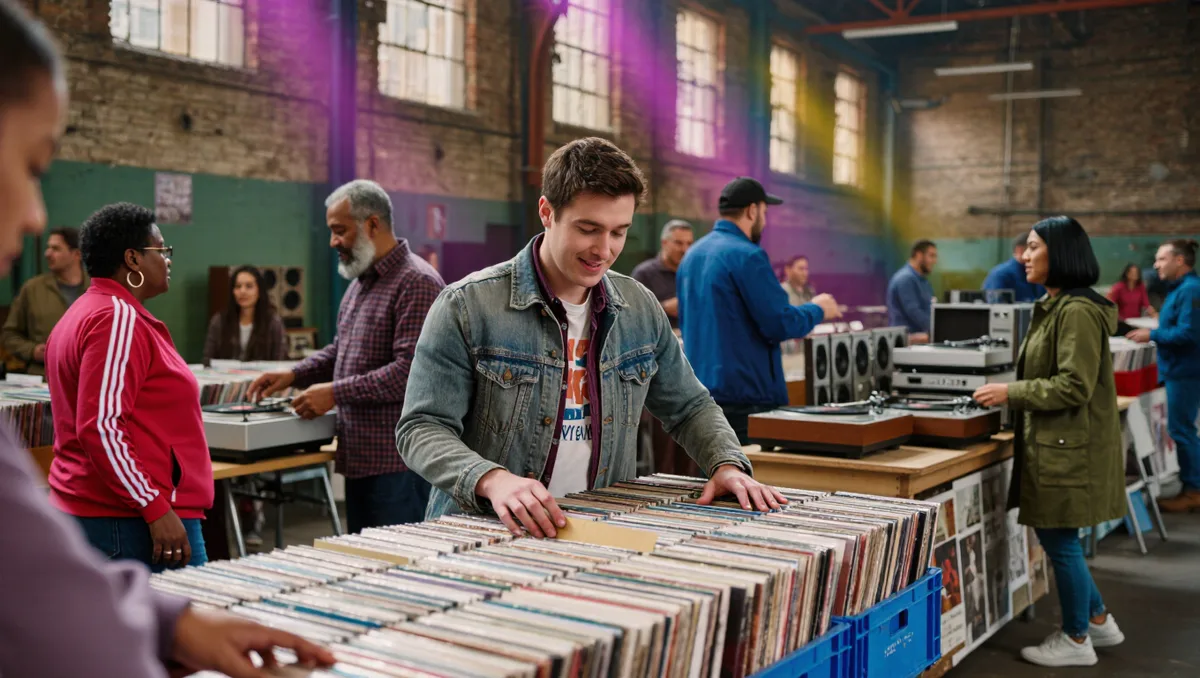
Collecting evolves. Many fans hunt for rare pressings through crate digging, the patient searching of record bins for finds. Some collectors build deep knowledge of pressing variations, label designs, and imports, and the reference notes that demand is usually highest for the earliest pressings.
Digital tools help too. Online databases such as Discogs began as a music database and grew into a marketplace for physical releases, which makes cataloguing a home shelf far easier than it once was. Write down what you own before you shelve it.
Conclusion: A Shelf Is Part of the Hobby
A bookshelf for vinyl is not furniture. It is the place where formats, history, and personal taste meet. Build it around your records' real sizes and needs, sort it in a way that matches how you listen, and protect the pressings you love.
Do that, and every trip to the shelf becomes part of the pleasure. The collection stays playable, the sleeves stay sharp, and the music stays easy to reach.