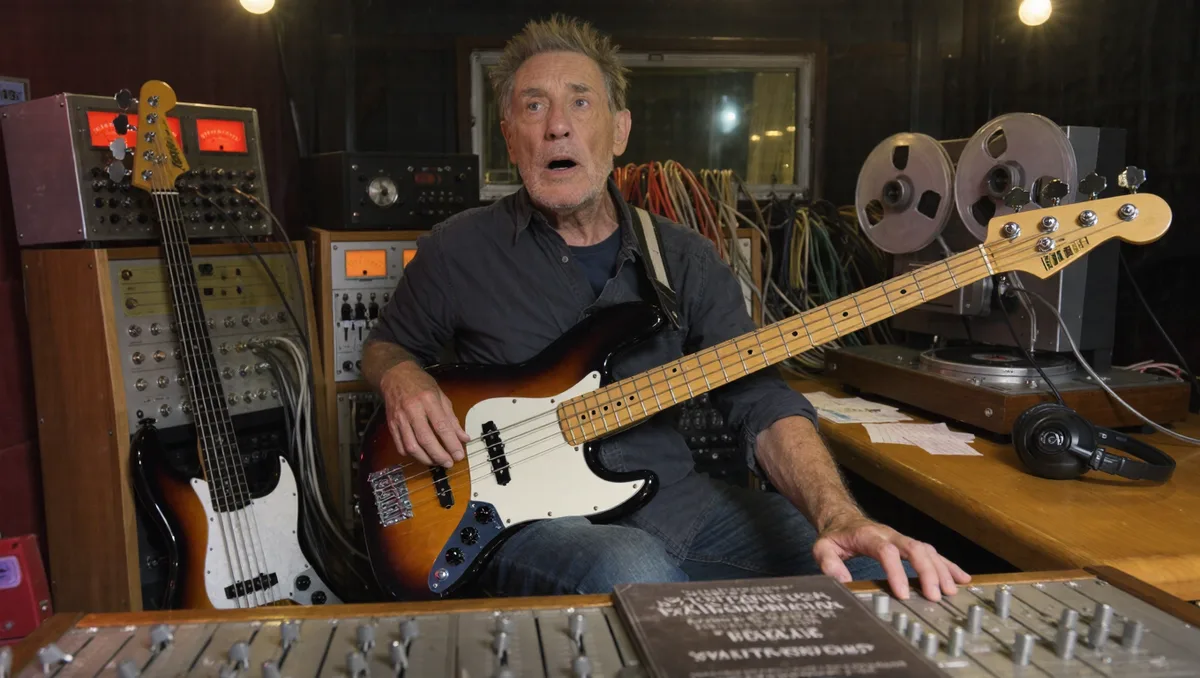
A session musician's memoir is a book written from the middle of the record, not the front of it. The session player, the sideman or sidewoman hired for a date, sits close enough to hear the take fall apart and come back together, and usually far enough from the marquee name to describe it plainly. That position is the whole appeal. These books are the closest thing printed music writing offers to standing in the control room while the tape rolls.
The claim this guide makes is a simple one: the best of these memoirs reward a particular kind of reading, one that watches for what the writer was actually hired to do. A bass player's book is about time. A background singer's is about blend and survival. Read for the job, and the memoir stops being celebrity gossip at one remove and becomes a working document about how records get made.
It is also a category with real hazards, which is why a reader benefits from a few habits before spending money at the books shelf or the online equivalent. Not every memoir by a session player is a memoir by the person whose name is on the cover, and not every anecdote survives a second telling. The habits below are meant to sort the durable books from the disposable ones.
What exactly is a session musician's memoir?
It is a first-person life narrative by a player whose main employment was studio or touring work for other artists, rather than a career built on their own name above the title. The genre overlaps with but is distinct from the composer memoir and the oral history. A composer memoir tends to explain working methods and decisions; an oral history assembles many voices around one subject. The session memoir is one voice, and its authority comes from proximity: the writer was in the room, holding the instrument, on the date in question.
That proximity shapes the book's typical structure. Expect a musical apprenticeship, a first break that usually arrives through another musician rather than an audition notice, then a long middle section organized around records, tours, or artists rather than around the writer's own inner life. The best writers in this genre understand that their vantage point is their capital, and they spend it on detail: the arrangement that changed on the floor, the take that got kept against everyone's better judgement, the producer who worked by silence.
Why do these books matter to music storytelling?
Because the hit record has an engine room, and the engine room rarely gets to speak. The credited artist supplies the face; the session player supplies the part that made the record move. When that player later writes it down, the memoir corrects a persistent imbalance in music writing, which tends to orbit the famous. The correction is not resentful, at least not in the stronger books. It is technical. The sideman's story is often, at bottom, a story about craft under pressure, which is the same subject that animates good writing about storytelling in sound generally.
There is a second, quieter reason these books matter. They document working conditions that have largely vanished: the studio date as a form of employment, the union card as a livelihood, the three-hour call that produced a hit in the last twenty minutes. Memoirs are often the only first-person record of how that economy felt from inside. Historians of recording can reconstruct the sessions from logs and union files; only the players can say what the room smelled like.
How do you judge one before you buy?
Three checks, in order. First, the byline question: is the book genuinely written or co-written by the musician, with the co-writer's role stated plainly on the title page? A ghosted book is not automatically bad, but the reader deserves to know whose voice is speaking, and a publisher that hides the collaboration usually has something else to hide as well. Second, the sourcing question: does the writer distinguish between what they witnessed and what they heard about? The strongest session memoirs are scrupulous on this point, confining themselves to dates they played and people they worked with, and letting secondhand stories announce themselves as secondhand.
Third, the credit question. Session players live and die by credits, so a credible memoir is unusually easy to verify against the public record of album personnel. If the writer's account of who played on a given record does not match the liner notes, that mismatch is information, and it may point to a disputed credit, which is a matter the reader should treat as unresolved rather than adjudicate in the bookstore aisle. Where a memoir and the record disagree, the honest book says so.
These checks overlap with the ones useful for any music-life book, and readers who want a fuller framework for the composer variety will find one in Who Writes the Life: How to Judge a Composer Biography Before You Buy It. The standards travel well, because the underlying problem is the same: proximity is not accuracy, and a witness is still a narrator. This connects to our earlier piece, Who Writes the Life: How to Judge a Composer Biography Before You Buy It.
What should you expect from the writing itself?
Expect unevenness, and read the unevenness as data. Many session players were hired for their ears, not their prose, and the books that lean on a professional co-writer can smooth the writer's voice into blandness. The sweet spot is the memoir where the player's own cadences survive: the studio shorthand, the dry joke at the expense of a temperamental star, the matter-of-fact description of a technique that took twenty years to learn and gets one sentence. That flatness is a feature. It is what the job sounds like from inside.
Expect, too, a particular kind of modesty about the music itself. A drummer who played on records that sold in the millions will often describe those records in terms of feel and fatigue rather than significance. The reader should resist the urge to supply the grandeur the writer withholds. The memoir's value is the opposite of mythmaking; it is the de-glamorized account of how a famous sound was assembled by tired professionals on a Tuesday.
How should you read them: print, ebook, or audio?
Format matters less here than for, say, a sheet-music collection, but it is not nothing. Session memoirs are text-forward, so almost any reading device serves. For readers who do much of their reading digitally, the hardware question has been covered thoroughly by specialist reviewers; according to PCMag's ereader guide, its top pick, the Kindle Paperwhite, pairs a sharp 300ppi E Ink display with waterproofing and weeks-long battery life, which makes it a reasonable companion for a long memoir read on a commute. Readers with ebook files rather than devices can also open a title directly in a browser; the EPUB Reader at epub.tools loads a .epub file locally, offers chapter navigation and adjustable text size, and stores reading positions in the browser, which suits a book read in sittings between other tasks.
Audio is the wildcard. Many of these memoirs are recorded by actors rather than by the author, and the difference is worth checking before buying a narrated edition. A memoir built on studio vernacular lands differently when the voice reading it has never said the words out loud in a room where they were true. When the author does narrate, the audiobook can function almost as an oral history, which is a related but distinct pleasure; the trade-offs between the two forms are the subject of The Voice on the Page: What Oral Histories Do That Memoirs Cannot.
Where does the session memoir fit on a music bookshelf?
It sits, deliberately, at an angle to the rest of the shelf. Next to composer memoirs, it supplies the executing hand rather than the conceiving mind; readers curious about what those books reveal about method can compare notes with Composing a Life on Paper: what composer memoirs actually reveal about working methods. Next to histories of recording, it supplies the temperature of the room that the documents leave out. And next to oral histories, it supplies depth at the cost of breadth: one memory, checked against its own limits, rather than many memories triangulating a scene. Readers following this should also see Composing a Life on Paper: what composer memoirs actually reveal about working methods.
The practical suggestion is to build a small cluster rather than a single title: a rhythm-section player, a background or backing vocalist, and a player from a different tradition or era, so the books can question each other. Where the accounts agree, the agreement is evidence. Where they collide over the same session, the collision is the most interesting page in the cluster, and a reminder that every memoir, however close to the tape, is still a story someone chose to tell.
What this means for the reader
The session musician's memoir is music writing's working-class literature, and it deserves to be read the way the work was done: closely, skeptically, and with respect for the craft. Buy for the vantage point, verify against the credits, and prefer the book that admits what its author could not have seen. The engine room earned its account the hard way, one call at a time, and the best of these books repay that with the only thing a working player ever really owed a record: the truth of the take.