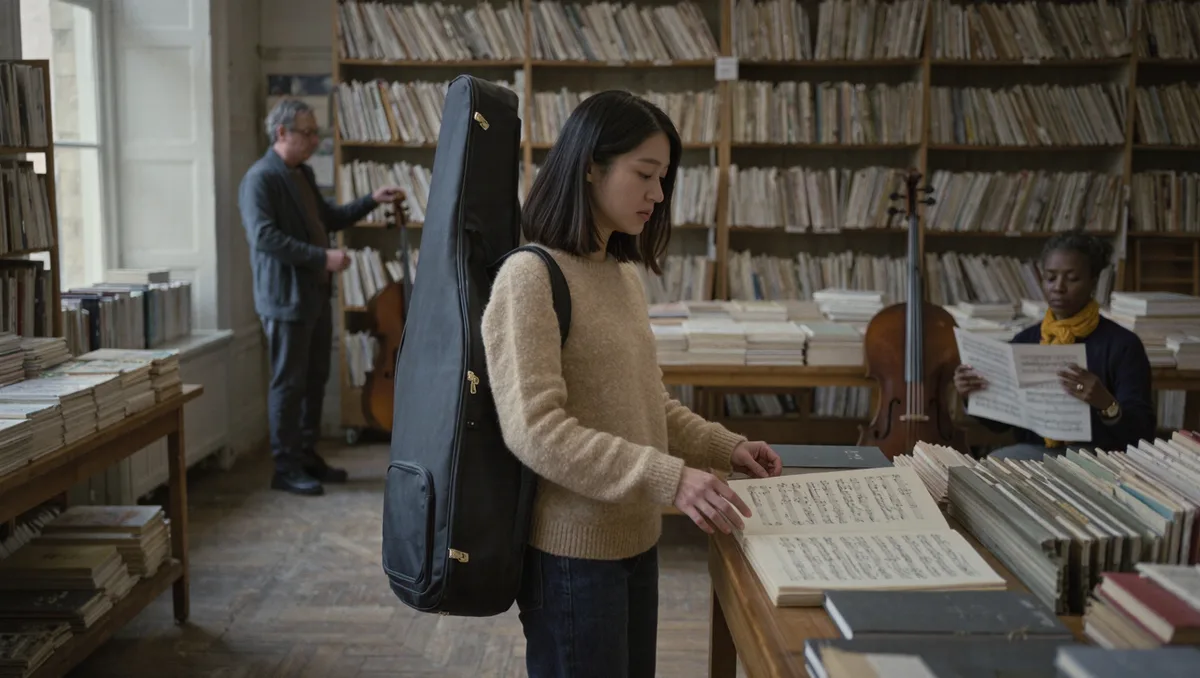
The best bookstores for music fans are rarely the biggest ones. They are the independents where a bookseller has decided that a shelf of composer biographies, oral histories, and books on film-score craft is worth the floor space, and where that decision shows. The question a reader typing "bookstores near me" into a search box is really asking is not which shop is closest, but which nearby shop has someone behind the desk who cares about the same books.
That question has a practical answer. Music writing lives in general-interest independent bookstores that take curation seriously, and the signs of it are visible from the doorway: staff picks with actual handwriting, an events calendar with authors on it, and sections that run deeper than the two or three bestsellers a chain might set face-out. This piece looks at what those signs are, using one well-documented city — Atlanta — as the worked example, and at how to read any local shop the same way.
What does a strong music-writing section actually look like?
It looks like depth, not display. A shop with a real music shelf carries more than the season's celebrity memoir. It holds oral histories, composer studies, books on the business of scoring, and reissues of older criticism — categories that sell slowly and reward a bookseller who orders for the long term. The tell is adjacency: music titles shelved near cultural history and criticism, where a browser will find them, rather than corralled into a single narrow cubby. Readers following this should also see The Score on the Shelf: a reading list of serious books on film-score craft.
The shops most likely to stock that depth are the ones with a documented life beyond retail. According to 365 Atlanta Traveler, A Cappella Books — opened in Little Five Points in 1989 and now on Haralson Avenue in Inman Park — hosts author events and signings, book clubs, and festival appearances, and sells vintage, rare, and signed first editions alongside new releases. A store that handles signed first editions and runs a year-round events program is a store whose buyers read; those are the shelves where specialized nonfiction, music writing included, tends to accumulate.
Why do independent shops carry the books chains skip?
Because an independent buyer can afford to be wrong about a slow title. A single owner or a small buying team orders to taste and to the neighborhood, so a shop can hold a biography of a film composer that might sell one copy a month and still earn its place. Chain inventory is set centrally and optimized for turnover; the deep, idiosyncratic music shelf is a local decision by definition.
The same logic explains why used and vintage shops matter so much to music readers. Much of the best writing about music is out of print, and it surfaces on secondhand shelves. As 365 Atlanta Traveler notes, Atlanta Vintage Books in Chamblee — a shop owned since 2007 by a couple with a long background in publishing — stocks rare and collectible editions across narrow niches, along with historic newspapers and magazines. For a collector hunting an old oral history or a decades-old criticism collection, that kind of inventory is often the only route.
Which shops should a traveling music reader start with?
Start with the generalist indies that have earned a reputation for curation, then work outward to the specialists. In the Atlanta example, a 2026 roundup by the local blog Paige Minds the Gap names A Cappella Books as the classic Atlanta indie for general browsing, praising its staff picks, author events, and connection to the city's literary scene, and points readers toward neighborhood shops like Tall Tales Book Shop in the Toco Hills shopping center and Virginia Highland Books for a slower, more local browse.
The specialists matter too, because music writing is cultural writing. Charis Books & More, founded in Little Five Points in 1974 and moved to Decatur in 2018, is described by 365 Atlanta Traveler as the oldest independent feminist bookstore in the country, specializing in feminist and cultural studies titles and hosting author events, book clubs, and open-mic nights. Cultural studies shelves are where writing about music scenes, subcultures, and the politics of sound tends to live — a reminder that the music section is not always labeled "music."
What this means for your own search
Practical steps, in order. First, search for independent bookstores rather than bookstores generally; the chains rarely hold the depth. Second, check each shop's website for an events calendar before visiting — a store that hosts authors is a store that stocks what authors' publishers are pushing, and specialized nonfiction travels on that circuit. Third, when you visit, go past the front table. The front table sells the season; the shelves at the back hold the backlist where music writing accumulates.
Fourth, ask the bookseller. This is the step most readers skip, and it is the one that works. Independent booksellers know their own inventory's gaps as well as its strengths, and a question like "where do you shelve books about music?" often turns up titles shelved under biography, film, or cultural history that a browser would walk past. Fifth, if the shop has a used or rare department, say so when you ask — out-of-print music titles are exactly the stock a rare-books buyer enjoys being asked about.
The same method travels. A reader-ranked 2026 survey of Georgia bookstores by Coffee the Canvas highlights shops outside the metro area that reward the same reading of the room: Avid Bookshop in Athens, with hand-written staff recommendations and a calendar of signings and workshops; E. Shaver, Bookseller in Savannah, near Madison Square, with themed rooms and sections leaning toward literature, history, and regional writers. Different cities, same signals — curation, events, and depth over display.
Why the shelf itself is worth the trip
There is a quieter reason to seek these shops out, and it has to do with how music books work on a shelf. Online, a book about a composer arrives alone, stripped of its neighbors. In a store, it sits beside the oral history it was written against, the memoir it answers, the score collection it annotates. Browsing is how those connections get made — and it is why the guides to reading music books well on this site, from how to judge a composer biography before you buy it to the history of liner notes as a literary form, assume a reader with a stack in hand rather than a single tab open. We covered a connected angle in Who Writes the Life: How to Judge a Composer Biography Before You Buy It.
The evidence from the Atlanta shops points one way: the store that hosts authors, staffs its desk with readers, and holds its backlist is the store that will have the music writing. None of what makes such a shop is visible from a search result. It is visible from the doorway, and worth the trip to find out.