Liner notes are the essays, credits and commentary printed on an album's packaging, and their literary history begins with a size change: Columbia's 12-inch long-playing record of 1948 gave the sleeve room for several hundred words, and writers moved in. The Library of Congress's music librarians describe Smithsonian Folkways liner notes as significant, often incorporating field research — scholarship printed on cardboard.
The form deserves a history because it is now an endangered one. Streaming carries no sleeve, and the writing that lived there has scattered into booklets, reissue essays and standalone books. What follows is what the form was, at its height.
What did the LP sleeve make possible?
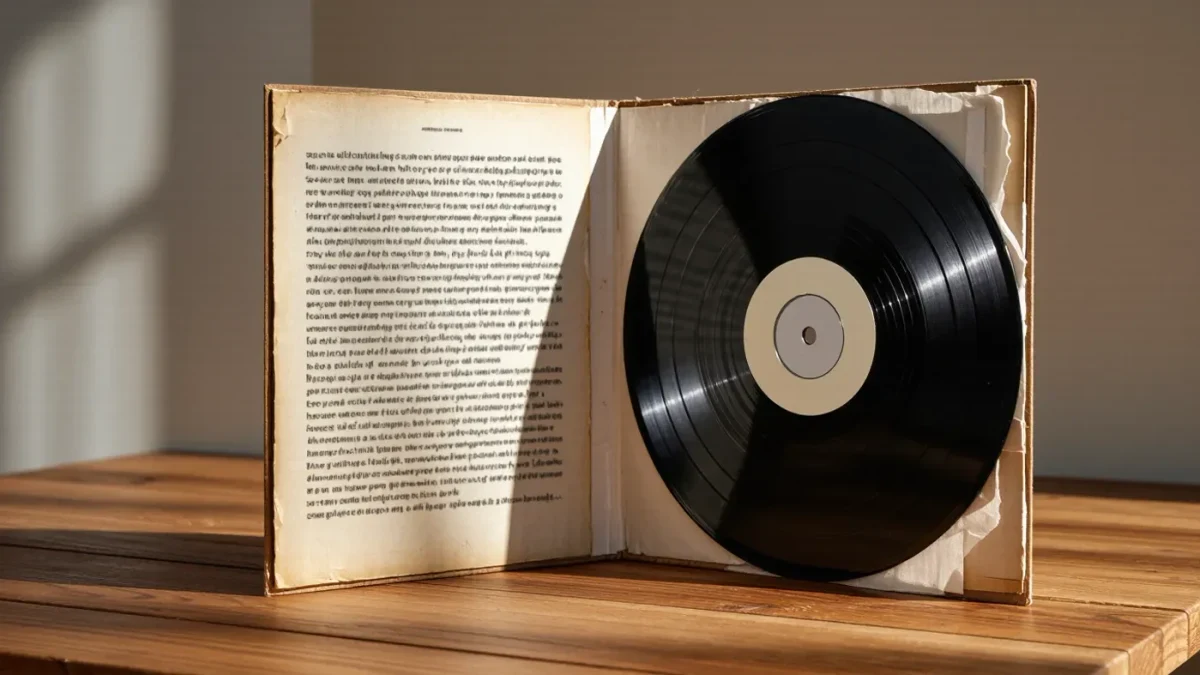
Before 1948, notes were a cramped accessory. A 78 rpm album — literally a bound book of discs — offered thin pages and less room, and the writing on them tended toward terse personnel lists. The 12-inch LP gave the back cover roughly the area of a postcard and, with gatefold sleeves from the mid-1960s, entire inner spreads. That physical space created a job: someone had to fill it, and the someone was often a real writer working at real length.
Three kinds of writing settled into the format early and stayed. There was the informative note — who plays, when, where, who wrote what — which became an archival record scholars still depend on. There was the critical essay, an assessment of the music by a named writer with a point of view. And there was the artist's own voice: the singer-songwriter essay, the musician's statement, occasionally the lyric sheet disguised as literature. The best notes braided all three.
The rock era widened the canvas again. Gatefold sleeves of the late 1960s and 1970s carried lyric sheets, photographic sequences and sleeve essays, and the writing ranged from deadpan catalogue copy to full-blown manifestos; certain albums are remembered as much for the words on the fold as for the music inside. A record industry at its commercial peak was effectively commissioning short-form journalism at scale, with print runs no magazine could match — a subsidy for music writing that vanished with the formats that paid for it.
Why did jazz and folk labels take the form furthest?
Because their records needed explaining and their audiences wanted it. Jazz LPs carried discographies, session dates and arguments about the music's history — material the mainstream press was not printing. Folkways, founded by Moses Asch in 1948, went further still, packaging records with substantial booklets of lyrics, translations, photographs and field notes, in effect publishing ethnomusicology as a companion object to the recordings. The Library of Congress's National Library Service music blog, surveying Folkways holdings, describes liner notes that incorporate field research as a matter of course — documentation the recorded music alone could not carry.
Jazz produced the form's first star writers. Leonard Feather, the critic and pianist, wrote album notes from the 1940s onward and treated the sleeve as journalism. Ralph Gleason, co-founder of Rolling Stone, brought a columnist's urgency to jazz sleeves in the 1960s. Their bylines mattered to readers who learned the critics' names from sleeves before newspapers: a note signed by a respected critic was part of the record's claim on the listener's shelf, and collectors learned to buy certain albums partly for the essays on the back.
What did the Grammy do for the form?
It gave sleeve writing an institutional rank. The Recording Academy has awarded a Grammy for Best Album Notes since 1964 — one of the few literary categories in the awards — and the honor roll doubles as a canon of the form. Dan Morgenstern, the jazz historian and director of the Institute of Jazz Studies at Rutgers, won it several times for notes on reissues by Louis Armstrong and others. That a body primarily rewarding performers sustained a prize for essay writing for over six decades says something about how seriously the industry once took the sleeve. The winning notes have aged into reference material: session dates, corrected personnel and first-hand context quoted in biographies decades later.
The award also tracked the form's center of gravity. Early winners wrote for jazz and cast-album releases; later decades saw the prize move to historical reissues and box sets, where the note swelled into a small book — session grids, oral history quotations, an argument about why the music mattered. The reissue essay became the sleeve's final grand form precisely because the single new LP no longer needed a writer to sell it.
How did hip-hop and reissue culture extend the genre?
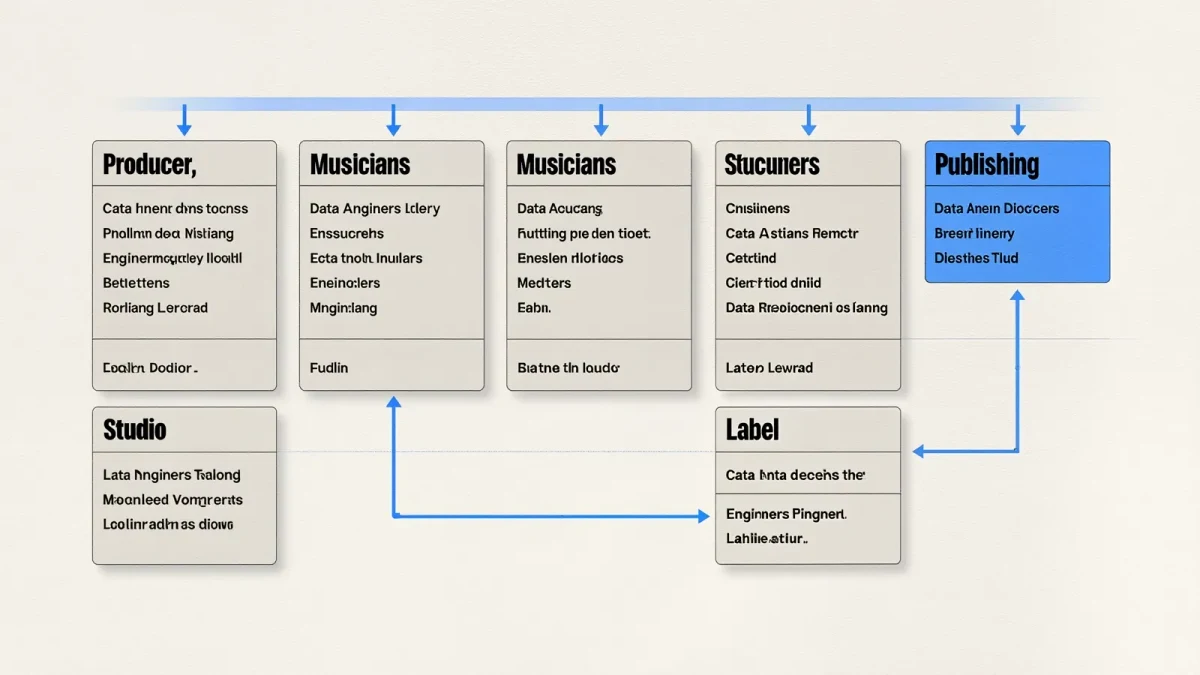
Hip-hop made the credits themselves the literature. The lists of producers, engineers, samples and studios on a rap LP's inner sleeve were read closely, argued over and memorized — a different kind of liner note, factual rather than essayistic, that functioned as the genre's public record. Brian Coleman's book Check the Technique: Liner Notes for the Hip-Hop Junkie (2007), cataloged by the Library of Congress, made the relationship explicit: new, interview-based liner notes for classic albums, published in book form because the original sleeves had not carried enough.
Reissue culture did the same for every other genre. The deluxe box set of the CD era ran to dozens of pages of newly commissioned essays, and the vinyl revival that followed restored printed inner sleeves and gatefold text as a selling point rather than an afterthought. In each format shift, the note survived by moving house — from sleeve to booklet to book — losing its accidental audience at every move.
Where do liner notes live now?
Mostly off the object. Digital booklets, still distributed with some album downloads, carry the credits and occasionally the essay; streaming platforms generally show only compressed metadata, a sentence of biography where a critic once had four paragraphs. The writers went where writing goes: to newsletters, to label websites, to the essay in a super-deluxe box set, to artist statements on Bandcamp-style pages where a musician can publish any length of note without a printing press.
What has not survived is the packaging of writer and music into one purchasable object, read while the record plays. That pairing — a first listen with the sleeve in the hands — was the form's real condition, the reason notes stayed short, personal and specific. The National Recording Registry's essays on registered recordings, published by the Library of Congress, are perhaps the form's most dignified descendant: commissioned writing about a specific record, permanent, public, and no longer attached to the object it describes. The sleeve essay began in 1948 with a rectangle of cardboard; its afterlife is a page on a screen, read anywhere except where the record lives.