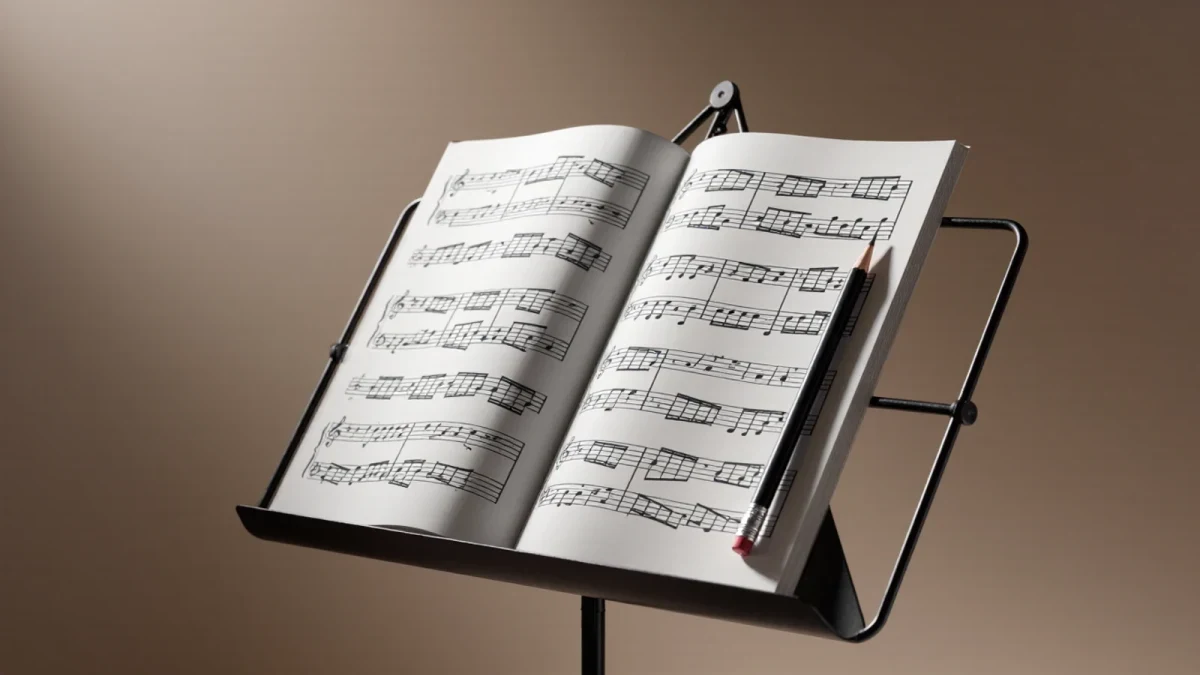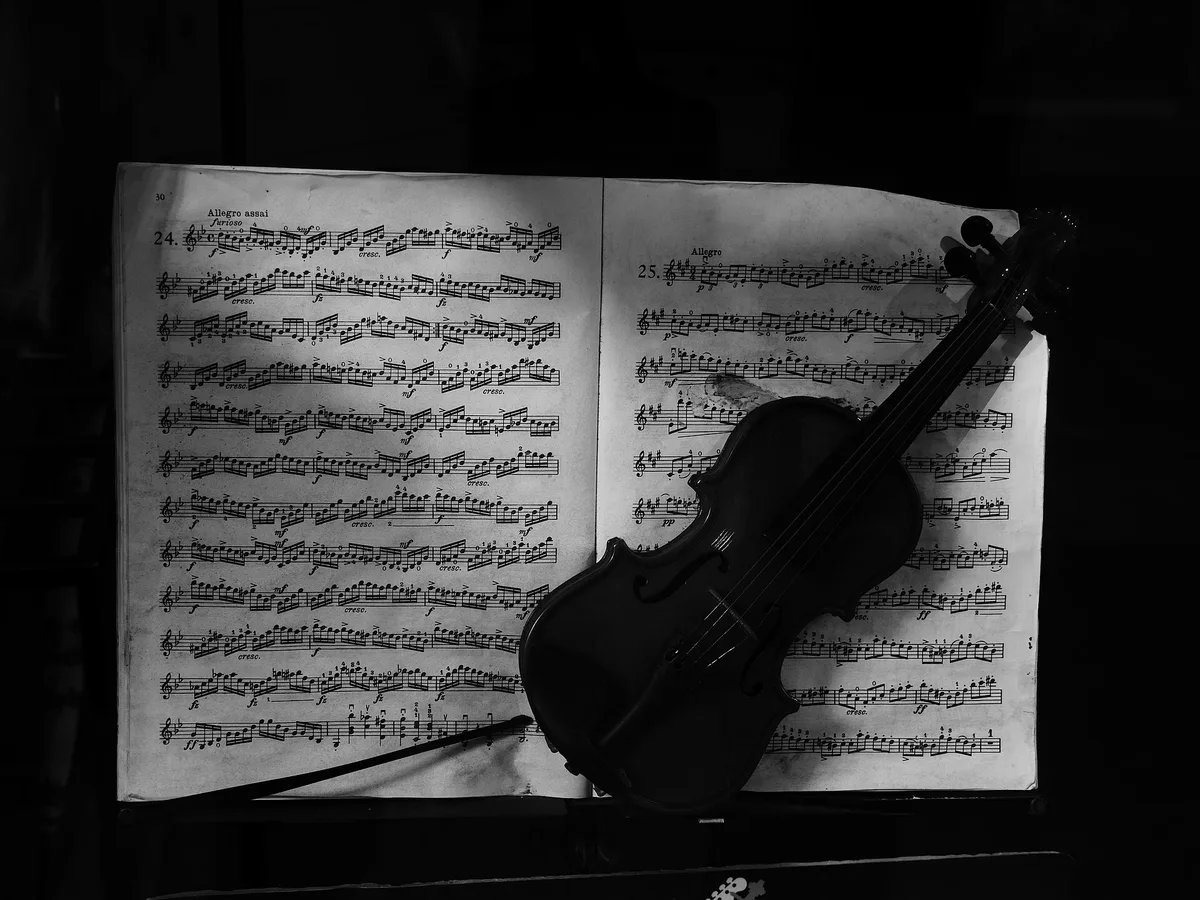
Every printed score is an argument. The urtext edition of a Beethoven sonata, the Busoni-edited Bach of the early twentieth century and a paperback performance album of 1910 salon pieces present the same notes as three different documents, each shaped by an editor's decisions. The Library of Congress alone holds more than twenty-two million notated items, and the difference between a landmark printing and a later knockoff often sits in a single plate number on the bottom of a page.
What does urtext actually mean?
Urtext is German for "original text," and an urtext edition attempts to present a composer's notes as close to the surviving sources as scholarship allows — manuscripts, corrected proofs, first editions the composer supervised. The promise is not that the text is free of decisions; it is that the decisions are documented. A serious urtext carries a critical report, the Kritischer Bericht, listing variants between sources and explaining each editorial choice, and that apparatus is what separates scholarship from a clean-looking reprint. The urtext movement is younger than many collectors assume: G. Henle Verlag, the publisher most associated with the term, was founded by Günter Henle in 1948, in part because musicians returning from the war wanted Bach and Mozart texts stripped of accumulated editorial decoration.
What urtext removes is often more audible than what it keeps. Earlier editions routinely added fingering, dynamics and phrasing slur by slur, presented as though the composer had written them. Strip those layers away and the page becomes quieter — and harder to play, which is precisely the point of disagreement. books coverage.
How did collected editions change the music on the shelf?
The nineteenth century industrialized the score. The Bach-Gesellschaft, founded in Leipzig in 1850, issued the complete works of Bach between 1851 and 1900 in some fifty volumes, and for the first time an organist in a provincial town could own the whole corpus. That edition was superseded by the Neue Bach-Ausgabe, published by Bärenreiter from 1954 to 2007, which re-examined the sources with modern philology and corrected hundreds of readings the older volumes had fixed in the public ear. Similar complete-edition projects — Gesamtausgaben — covered Mozart, Schubert, Schumann and the rest of the canon, and the volumes themselves became collectible: tall, cloth-bound series that libraries bought by the running meter.
For a reader of scores as texts, the collected editions carry a lesson: the "same" piece has a textual history, and the measure numbers, slurs and even notes differ between the edition your grandmother learned from and the one on a music-shop shelf today.
Who writes the fingering — and whose Bach is it?
A performance edition is a score with a named musician's working solutions baked in. Ferruccio Busoni's edition of Bach's keyboard works, published by Breitkopf & Härtel from the 1890s, is the famous case: Busoni preserved Bach's notes and wrapped them in his own dynamics, registrations and occasional embellishments, effectively offering Bach filtered through a late-Romantic virtuoso's imagination. Players of the era loved it; scholars later pulled the other way, and the pendulum between those two poles — the edition as creative instrument versus the edition as archive — has never stopped swinging. Modern publishing usually splits the difference: an urtext text with a distinguished performer's fingering printed in a lighter gray, so the layers are at least visually distinct.
For collectors, the rule of thumb is honesty of labeling. An edition that states its editor, its sources and the date of its scholarship can be argued with; one that hides its interventions can only be discovered, usually note by note.
How can a collector tell one printing from another?
The tools are unglamorous and reliable. Publishers engraved scores onto metal plates and stamped a plate number — a sequence of digits and letters — at the foot of each page, and that number ties a copy to a specific engraving and, roughly, a period. Title-page imprints change as publishers move, merge or are bought; a firm's address narrows a printing to the years that address was current. Later printings from worn plates show broken staves and gray lines; facsimiles, which reproduce an original source photographically, announce themselves as such — and a facsimile of a composer's manuscript is a different object entirely from a typeset edition, valuable for what the handwriting shows about revisions.
Condition follows the usual book trade rules, with music-specific aggravations: foxing on paper stock that was often acidic, bound-in parts torn at the folds, and library stamps that lower price but document provenance. A library deaccession stamp can be a feature rather than a flaw — it is a dated, named piece of the object's history.
What is a facsimile good for?
A facsimile reproduces a source photographically — an autograph manuscript, a first edition, a sketchbook — and its value is precisely that it shows what no typeset edition can: the composer's actual marks. Beethoven's sketchbooks, studied for two centuries through facsimiles, reveal how a bar was rewritten four times before it settled; an autograph fair copy shows tempo words squeezed in later, in a different ink. For readers learning to follow notation, a facsimile is also honest training, because it teaches that the tidy printed page began as something debated, crossed out and renegotiated. Publishers of urtext volumes increasingly issue companion facsimiles of the principal source, so a collector can check the edition's claim against the document it claims to represent.
The popular sheet music of the 1890s through the 1910s adds another collector's dimension entirely: lithographed title-page illustration, where cover art was often the selling point and the artist sometimes matters more than the composer. These albums survive in huge numbers and poor condition, which keeps entry prices modest and makes them a natural first field for a new collector learning to grade paper, printing and completeness.
Where do digital libraries fit?
Digitization has quietly turned sheet music collecting from a cabinet hobby into a research practice anyone can attempt. The Library of Congress's notated music collections place scanned first editions and sheet-music covers in the open, with rights statements per item, and university libraries have followed with manuscript collections that were previously travel-only. The scan does not replace the object — paper weight, engraving depth and binding survive no camera — but it settles the textual questions instantly. A collector can compare a suspect printing against a digitized first edition line by line before bidding, and the editions worth owning are increasingly the ones the scans cannot exhaust: dense critical reports, fine facsimiles, and early printings whose physical history is part of the argument.
The shelf, in the end, is where the argument stays legible. Henle began printing urtext volumes in 1948 because one industrialist believed the notes deserved a cleaner witness; the Bärenreiter project took fifty-three years to finish re-reading Bach. A printed score is a book that happens to speak in pitches, and it is read the same way any book is read — by asking who set this text, when, and to prove what.