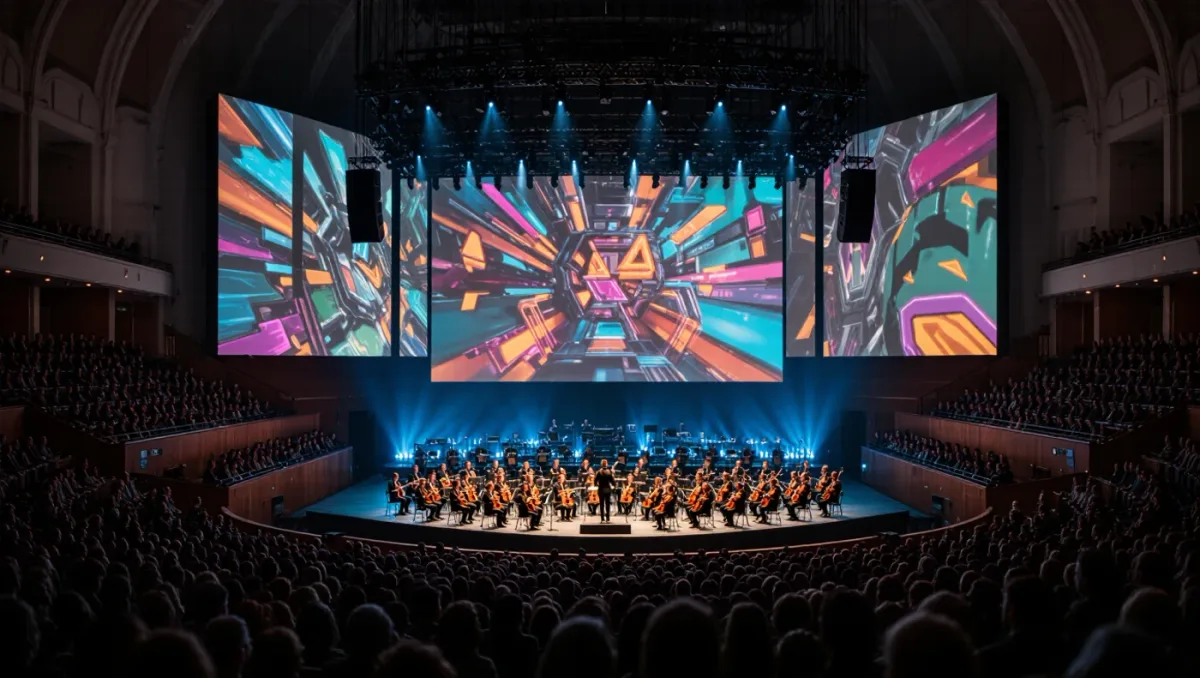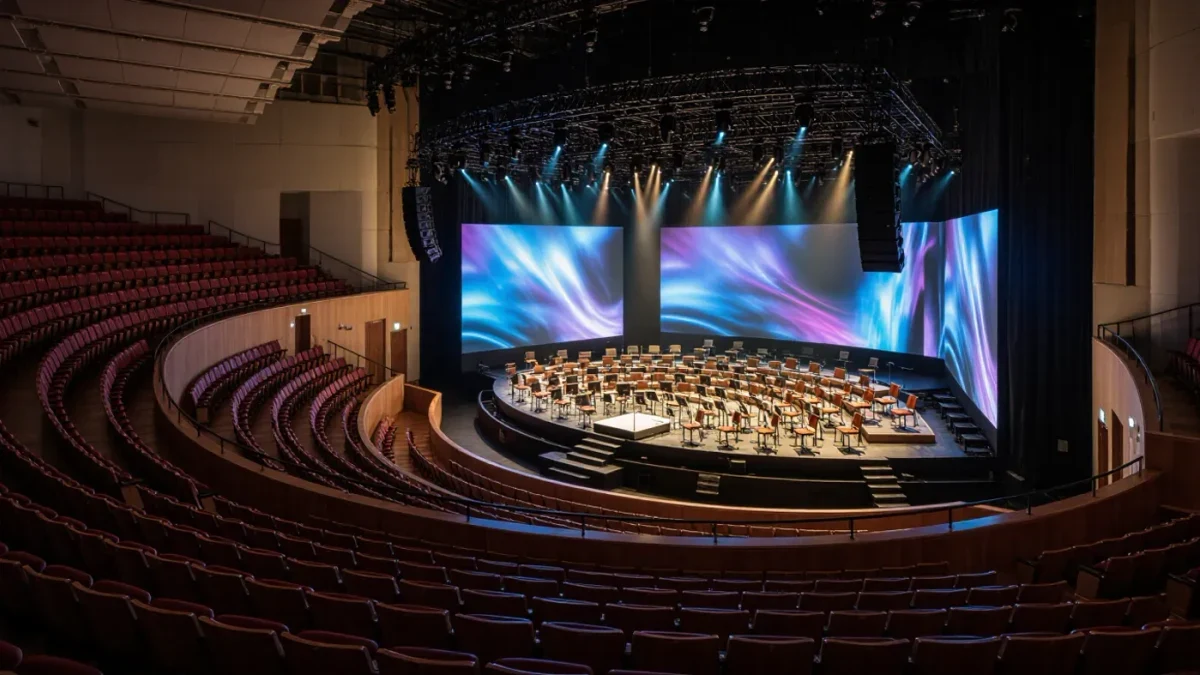
Game soundtracks became a release business in their own right when the concert world stopped treating them as a novelty: on 1 August 2022 the BBC Proms staged From 8-Bit to Infinity, Prom 21, the first Prom devoted entirely to video game music, with Robert Ames conducting the Royal Philharmonic Orchestra at the Royal Albert Hall. That single booking did more to legitimize game scores as concert repertoire than a decade of touring shows, because it placed them inside the oldest classical festival in Britain. The release economy — vinyl pressings, digital albums, licensable stems — grew up around that growing respect, and 2026 finds game music a settled part of how soundtracks reach audiences.
Why did game music take so long to reach the concert hall?
The music began life inside machines with almost no memory. The Famicom, released in Japan in 1983 and known internationally as the Nintendo Entertainment System, gave composers a handful of sound channels, and writers like Koji Kondo built themes within those limits that players can still sing. The constraint was technical, but the result was compositional: short, looping, melodic material that behaves like folk music — portable, memorable, easily rearranged. Orchestras did not initially know what to do with it, partly because the scores were not published as notation, and partly because the games industry sold music as embedded product rather than as repertoire.
Both obstacles eroded. Composers' names began appearing on title screens, then on album releases; fan arrangements and touring concerts built an audience the institutions eventually noticed. By the time the 2022 Prom was programmed, the music had been concert-ready for years — the hall was simply late.
What did the first Gaming Prom actually prove?
Programmatically, it argued for range. The 1 August 2022 programme ran from early chiptune to a suite from Battlefield 2042 by Hildur Guðnadóttir and Sam Slater, alongside Jessica Curry's music for Dear Esther — an Oscar-winning composer and a games-native composer on the same bill, in the same arrangement ecosystem. Reviews treated the evening as music rather than stunt, and the significance was structural: a national broadcaster had scheduled game music inside its most tradition-bound festival, on BBC radio and television.
How do orchestras program game music now?
By franchise and by hook. On 4 June 2025 the Royal Philharmonic Orchestra returned to the Royal Albert Hall with Worlds of Fantasy: Video Games in Concert, conducted by Eímear Noone, a conductor and composer associated with the World of Warcraft scores, with a programme drawing on titles including The Last of Us and World of Warcraft. The orchestra framed the concert with its own commissioned research, reported around the announcement, finding that a substantial share of young listeners first encountered orchestral music through games — an audience argument any marketing department understands.
The pattern repeats across seasons: orchestra, conductor with genre credibility, franchise-heavy programme, arena-scale production. It is the same shape film-music concerts took a generation earlier, which is why game-score nights now sit beside them in summer festivals rather than apart from them.
How are game soundtracks released as records?
Three routes now run in parallel. Digital storefronts and streaming platforms carry the full score album, often released alongside the game itself. Specialty labels press physical editions — vinyl box sets for franchise anniversaries, cassette and CD runs for smaller titles — turning soundtracks into collectible objects with liner notes, artwork and variant pressings. And publishers increasingly license stems and arrangements for concert use, which is what makes the touring economy above possible.
The physical market matters beyond nostalgia. A pressed score album forces editorial decisions a streaming release avoids: what running order tells the story of the game, what gets remastered, what stays as a file. In that sense the vinyl box is the format where game music most resembles film-score culture, with the same archival arguments about complete-versus-highlights releases that film-score collectors have had for decades.
Why does release order matter for a game score?
Because a game's music is written to be non-linear. A composer scores exploration, combat, menus and failure states, each looping and layering according to what the player does — the opposite of a fixed cue list. A release album therefore has to impose linearity: someone decides a sequence, fades and edits, effectively composing a second piece out of the first. The best game soundtrack albums acknowledge this and are sequenced with intent, and the difference between a dumped set of files and a sequenced record is audible within minutes.
Concert suites push the same process further. Arrangers select themes, set an order and write for orchestra, making explicit the narrative the game only implied. When the Royal Philharmonic Orchestra played the Royal Albert Hall in June 2025, the audience heard not the game but an argument about it — a curated telling.
What should a collector watch for in a game score release?
The same questions film-score collectors learned to ask. Is the album the complete score or a curated selection, and does the listing say which? Was it mastered from the original session files or from the in-game mix, which is compressed for playback underneath sound effects? Does the edition document the composer, arrangers and performers, or only the franchise? A release that answers those questions on its face is treating the score as a record; one that answers none of them is treating it as merchandise, and the difference shows up on the turntable within a side.
Edition sizes and repressings deserve attention too. Specialty vinyl runs are often pressed once, in numbered quantities, and announced with short windows; a title that sells out on pre-order may return years later or never. Collectors who care about the music rather than the object are well served waiting for the digital edition, which usually appears first and stays available.
Does adaptive music translate to records at all?
Imperfectly, and the imperfection is interesting. A game score is built as layers and states — a combat layer that swells over an exploration bed, a sting that interrupts both — so no single linear sequence is the music; every playthrough renders a slightly different version. Album producers solve this by choosing a canonical path, much as a film-music compiler once chose which cues and alternate takes to include on an LP that could not hold a full score. The album is therefore an interpretation, not a transcript, and the strongest ones are sequenced by someone who understands both the game's structure and record pacing. Listeners who compare an album against the raw in-game audio are effectively comparing two different works that share themes — which is, in the end, the same relationship a concert suite has always had with the score it came from.
Where does the BBC's 2026 season leave game music?
The direction is confirmation rather than novelty. The BBC announced its full 2026 Proms season on 21 April 2026 — 86 concerts at the Royal Albert Hall from 17 July to 12 September, all broadcast on BBC Radio 3 and BBC Sounds, with two dozen televised — in a festival that has spent the past decade steadily widening its definition of repertoire. Game music no longer needs a single landmark Prom to justify itself; it has touring concerts, franchise symphonia, pressed vinyl and a generation of listeners for whom the distinction between a game score and a film score was never meaningful. The release story is no longer whether game soundtracks count, but how completely they have adopted the entire apparatus — labels, concerts, festivals, archives — that older score traditions built first.